
It’s on everyone’s mind. It affects everyone. And, everyone has heard something not true. Now, I’m nearly a college graduate with a BS in biology at Ohio State, I am not an epidemiologist, I’m not a doctor, I’m not a pathologist. This post is the result of the research skills I’ve been taught and in my hope to aid in scientific literacy. This being said, keep checking your sources, take a deep breath, and use common sense.
What Happened?

In case you haven’t heard, here’s a quick summary. We heard that a new coronavirus was taking over Wuhan, China. Next, we hear people coming from Wuhan and those in contact with them are at risk. Then, it becomes all of China. We start hearing places like Italy are being infected and the opinions start flowing. So at first, we didn’t do anything. Why should we? No one had symptoms? That’s how the government reacted and how the media started to portray this. Next thing we know, pandemic.




What is a coronavirus?
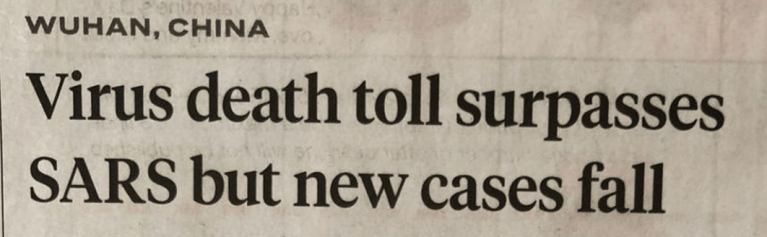
Coronaviruses actually aren’t all new. Ever heard of SARS? It was the most recent coronavirus outbreak, also originating in China, before the one we have now. COVID-19 (SARS-CoV-2) is novel, though. The name comes from a crown looking part of the virus
“The coronavirus is named after the crownlike spikes that protrude from its surface. The virus is enveloped in a bubble of oily lipid molecules, which falls apart on contact with soap” -NY Times
Testing:
We’ve made a big mistake on not having available tests as country as a whole. “The CDC also initially limited access to testing to a narrow group of individuals with known exposure”-Doctors in Diagnostic Testing Scientific Article (linked below). This is how it initially spread so fast. Usually, the FDA has to regulate the tests to make sure they are accurate and interpreted correctly, but as of February 29, 2020 the FDA allowed labs to make their own test kits in order to keep up with the amount of tests required as the virus spreads.
The test utilizes key parts of DNA transcription by providing primers for the virus to bind to, allowing us to determine whether or not someone has the virus.
Even without the test, you need to try to isolate as much as possible.
Also without the test readily available, the numbers we’re being told are wrong. They are likely overestimates in countries with the tests, since at first only the very sick were tested. In the U. S. however, our numbers are underestimates since we don’t have as many tests as we need.
Things get even more complicated because you can carry the virus without having any symptoms at all. This is also what’s truly making this virus so dangerous.
Symptoms:
These range from none, to fever, coughing, sneezing, pneumonia, to being sick enough to be in critical condition in the ICU. It’s hard to know because the range of symptoms is so broad and it presents differently in different people. You can carry it with absolutely no symptoms.
What should we do?
What the government says. If they say to stay inside and avoid people, do it. Even if you’re perfectly healthy you can still be giving the virus to everyone around you. This includes people immunocompromised and the elderly.
immunocompromised: having an impaired immune system (thanks Google)
Sources:
Science Vs Coronavirus: Fears and Facts by Gimlet
Science Vs Coronavirus: What Should You Do Now?
Diagnostic Testing Scientific Article
Science Daily

 Sunshine and Coffee