
The most frustrating part of global warming/climate change is people unwilling to look at the scientific data and take responsibility for the effects humans have had on the planet. People don’t bother to look into the research that has supported what scientists have already found, my research included. I’m detailing as much as I can express about global warming, in the hopes that people see what I see, and that is a human-induced change in the world.
Background:
Global warming: “A gradual increase in the overall temperature of the earth’s atmosphere generally attributed to the greenhouse effect caused by increased levels of carbon dioxide, chlorofluorocarbons, and other pollutants.” -Google dictionary
“We often call the result global warming, but it is causing a set of changes to the Earth’s climate, or long-term weather patterns, that varies from place to place. While many people think of global warming and climate change as synonyms, scientists use “climate change” when describing the complex shifts now affecting our planet’s weather and climate systems—in part because some areas actually get cooler in the short term. Climate change encompasses not only rising average temperatures but also extreme weather events, shifting wildlife populations and habitats, rising seas, and a range of other impacts. All of those changes are emerging as humans continue to add heat-trapping greenhouse gases to the atmosphere, changing the rhythms of climate that all living things have come to rely on.” -National Geographic
How does it work?
Many scientists believe the global trend of increasing temperatures is due to the greenhouse effect. The greenhouse effect is “the trapping of the sun’s warmth in a planet’s lower atmosphere, due to the greater transparency of the atmosphere to visible radiation from the sun than to infrared radiation emitted from the planet’s surface.” -Google dictionary

That means that heat from sun rays are being trapped in the atmosphere more than before. One reason for this are some gasses we have found with significantly higher levels than before. They include water vapor, carbon dioxide, methane, and nitrous oxide. “Carbon dioxide is released through natural processes such as respiration and volcano eruptions and through human activities such as deforestation, land use changes, and burning fossil fuels. Humans have increased atmospheric CO2 concentration by more than a third since the Industrial Revolution began. This is the most important long-lived ‘forcing’ of climate change.” -NASA

This works because plants absorb carbon dioxide and some of it comes out as oxygen. When plants die, they stop releasing oxygen and CO2 stays trapped inside the organism. When plants are pressed over many many years and are made into coal, the carbon dioxide stays inside. When we burn coal and other fossil fuels, we release the carbon dioxide that was trapped in these organisms. Compound this with the amount we’ve burnt since the Industrial Revolution and you have a valid source of climate change.
“A carbon dioxide (CO2) sink is a carbon reservoir that is increasing in size, and is the opposite of a carbon “source”. The main natural sinks are the oceans and plants and other organisms that use photosynthesis to remove carbon from the atmosphere by incorporating it into biomass.” -Google dictionary
Q: Where does the United States stand in terms of global-warming contributors?
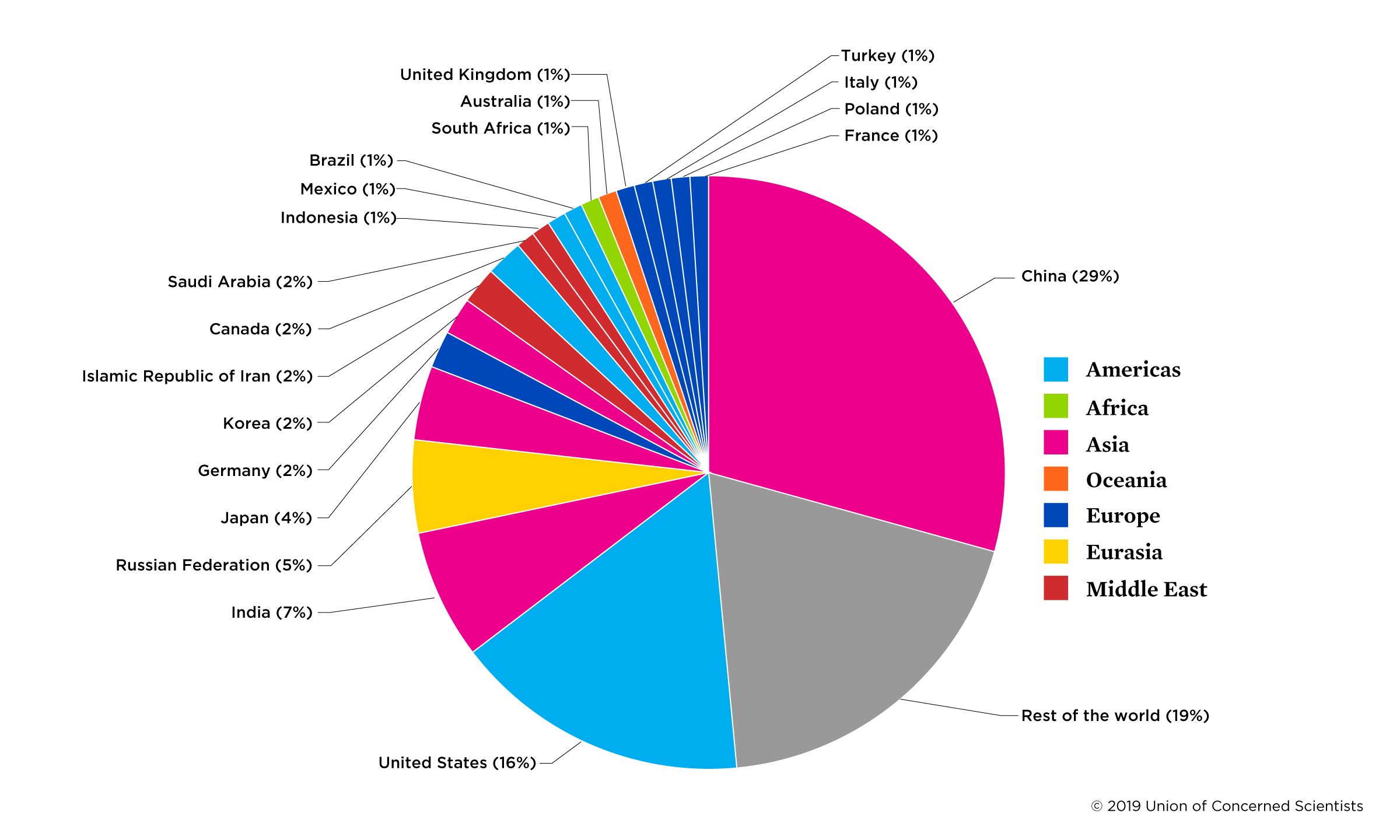
A: In recent years, China has taken the lead in global-warming pollution, producing about 28 percent of all CO2 emissions. The United States comes in second. Despite making up just 4 percent of the world’s population, we produce a whopping 16 percent of all global CO2 emissions—as much as the European Union and India (third and fourth place) combined. And America is still number one, by far, in cumulative emissions over the past 150 years. Our responsibility matters to other countries, and it should matter to us, too. -nrdc.gov
Want to see specifics of how the Earth has changed? This website gives a timeline starting in 1800 and going through 2018. Some of these terms might not make sense, many of them will be official names for natural cycles the Earth goes through. The rest will show the human impact. https://history.aip.org/climate/timeline.htm
Still don’t believe me? Head over to my contact page, let’s talk!
https://climate.nasa.gov/causes/
https://www.nationalgeographic.com/environment/global-warming/global-warming-overview/

 Sunshine and Coffee